Every wall, floor or ceiling ever designed and built is someone's decision. And it is always the right one.
"I grew up watching cranes build my future. Now I ask what we are building and why."
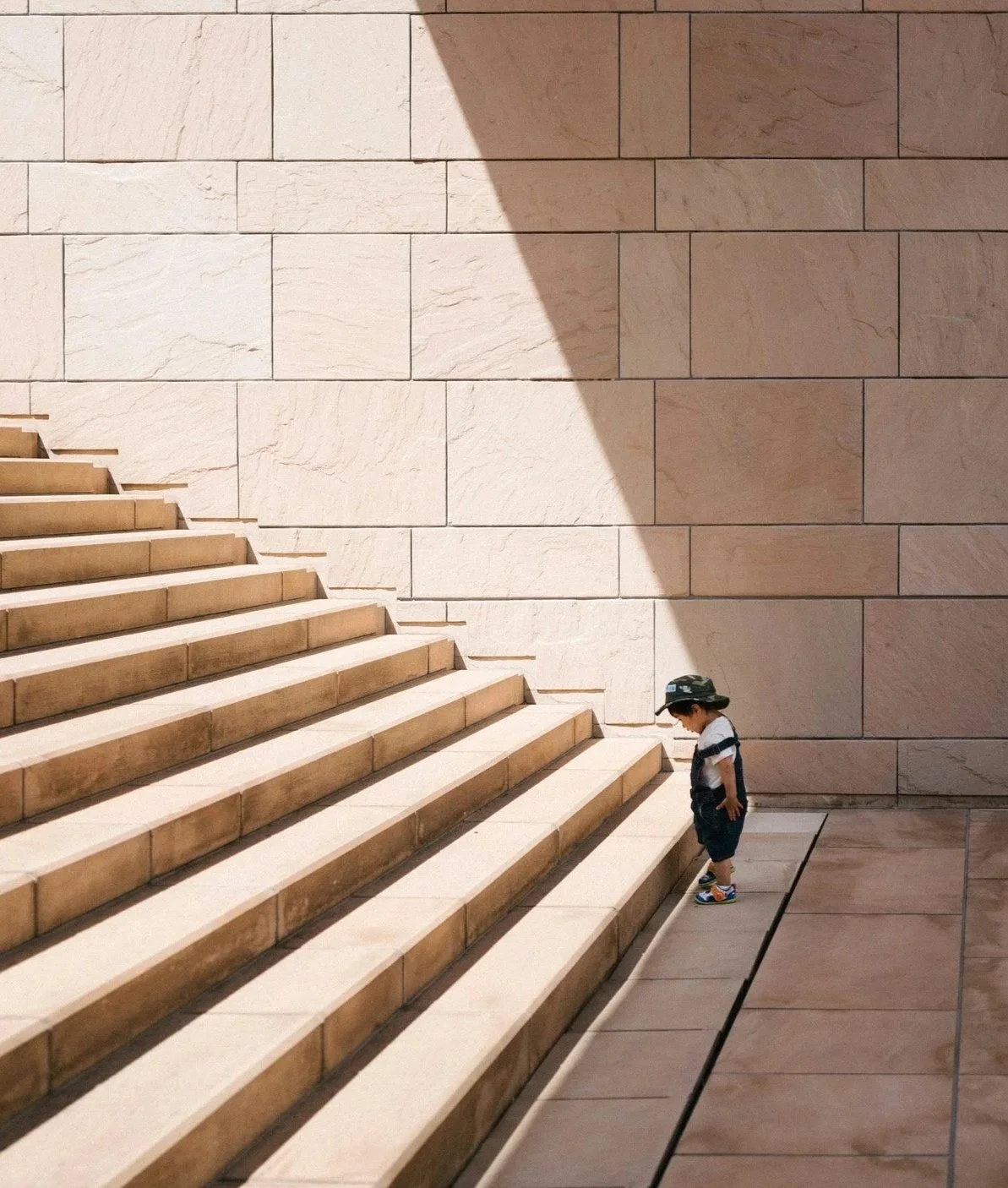
Twenty years of guiding clients through decision making in real estate. Leading and executing architecture, interior design, and regenerative construction projects.
We are systems thinkers implementing regenerative and universal design principles into buildable, deliverable projects, with responsibility for budgets, contracts, and multidisciplinary teams as well as strategic direction. We are recognised voices on accessibility, neurodiversity, and regenerative futures in the built environment. Bringing full-cycle design and delivery leadership to urban transformation, while mentoring the next generation of architects and designers.
Our expertise is in
UNIVERSAL DESIGN - designing inclusion in with equity of experience as a baseline
REGENERATIVE ARCHITECTURE - designing, developing and building within the planetary boundaries
KNOWLEDGE TRANSFER - mentoring the next generation so the way of how we design and create outlives any single project
Jonas Salk“Are we being good ancestors?”

It Is Called Progress. But It Was Always Extraction.
Modern economics treat land as a one time asset to extract from, not a system to steward. Real estate claims to be adding value, while ignoring all negative externalities. Buildings are conceived as objects, not as participants in the systems in which they exist: energy, water, biodiversity, the climate itself. The market labelled this as progress, and much of the world bought it — glass towers with concrete cores held up as the pinnacle of development. We are building past the limits the planet can actually carry. But who will pay this invoice with the reference "growth"? Because the wealth was never in the tower. It was in what lived there before we decided to replace it.

It Is Called Best Design. But Best For Whom?
Our bodies evolved in nature, inside forests and open land and weather, not inside right angles, LED lights, and sealed air. The nervous system we walk into a building with is the same one that evolved to read a horizon, sense a threat, orient itself by natural light. We have inhabited constructed environments for a fraction of our evolutionary timeline, and yet we design as though the resulting mismatch is our body's problem to solve, not the building's.
So the question worth asking plainly is this: is it our biology that is not fit for purpose, or is it our built environment? One of these we have the capacity to change.
Most of the built world is designed for one narrow slice of humanity; able bodied, aged roughly twenty to forty five, moving through space in exactly one expected way, on foot. Everyone outside that margin experiences exclusion, and that exclusion has a label. The people who have to navigate this failure are the ones we then call "disabled." This is discrimination by design, and it runs deeper than ramps and door widths, deeper than code compliance and current building regulatory standards. For decades we have found ways to optimise our built environment for the productivity and efficiency of the humans who occupy it, and somewhere along the way, we forgot the nervous system itself. We rarely call this what it is; a decision, made by someone, about who gets to belong, and what they are expected to endure to do so.

It is Called Innovation. But It Is Forgetting What We Already Know.
Every generation of builders, every generation of craftsmen, inherits less than it should. Heritage gets discarded as "old," craft dies with the people who held it, and disciplines that should be in constant conversation, architecture, ecology, engineering, community, operate in silos. The industry treats experience as something to be individually earned and then lost, rather than something to be deliberately passed on. We are not short on knowledge. We are short on the will to transfer it, in a world built on competition rather than collaboration. But every project built without that transfer starts one generation further behind than it needed to.
The Cost compounds A building designed and built today will most likely still be standing in fifty years, maybe a hundred, maybe more. Every exclusion built into it today is an exclusion inherited by people not yet born. Every extractive choice made now is a debt handed to a generation with no say in the transaction. And every piece of hard won knowledge left untransferred is a lesson the next generation will have to learn the hard way, again, and from beginning. This is not a design problem that corrects itself with time. Left alone, it compounds, and so the decision has to be a different one, made deliberately, made now. Stewarding land and its ecosystem for the next seven generations requires a different level of wisdom. A collective one.
We will help you understand the impact and value of your decisions
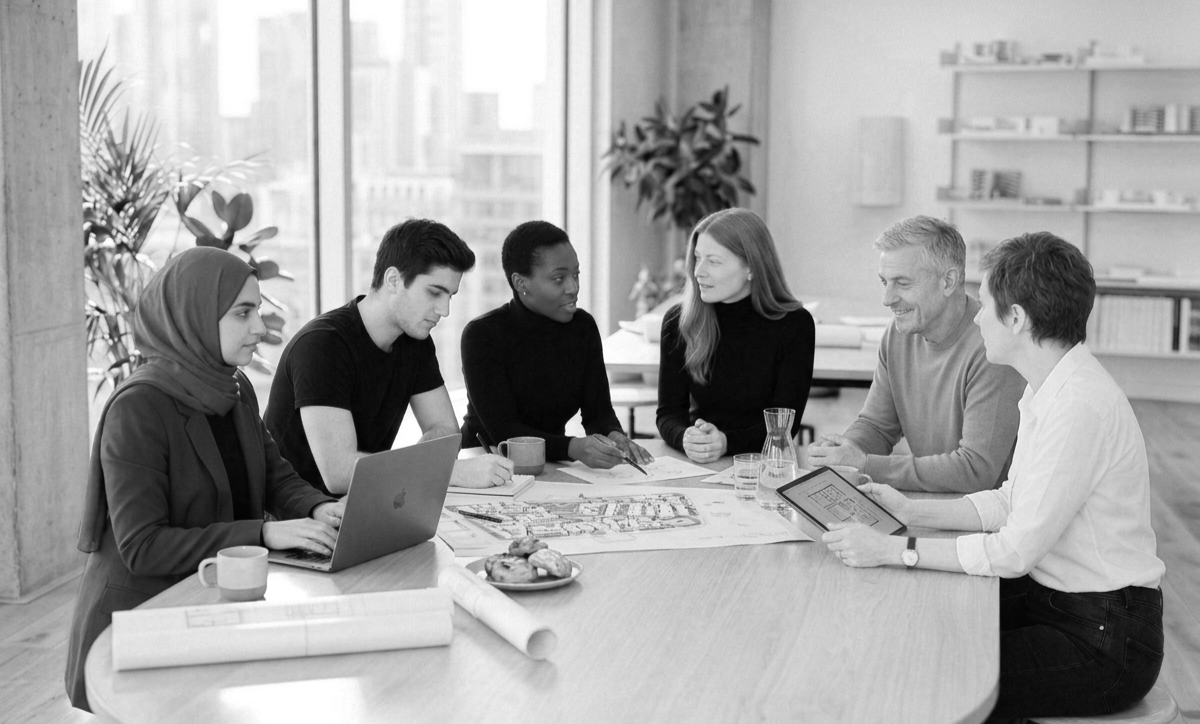
Decision making is a tension between fear of a predicament we are facing and falling in love with the extraordinary potential that exists in front of us.
We bring together strategy, design and knowledge transfer so you can make better decisions.
We do not build for mainstream ambitions; we design for human flourishing and planetary survival
Architecture Framework at Glance
STAGES
DIAGNOSE
DESIGN
DEVELOP
DELIVER
CORE QUESTIONS
What is this design brief assuming?
Does this serve every body and every system?
What is critical and who is essential to problem solve?
Does this still hold, once I've left the room?
GOVERNING IDENTITY
SYSTEM DISRUPTOR
INCLUSIVE VISIONARY
KNOWLEDGE WEAVER
ACCOUNTABILITY
WHAT IS ACHIEVED
Hidden exclusions and extractive assumptions are named
Equity of experience and planetary boundaries become the design brief
Heritage, craft, and cross-discipline expertise converge into a buildable system
The decision made at the start survives contact with reality
Understand our methodology in detail.
“The site is to the city what the cell is to the body. A city is not a collection of buildings, it is a social-ecological organism, a web of relationships between people, resource, and place, where the health of one part is never separate from the health of the whole. Seeing a city this way changes what “good design” means. It stops being about the object, the tower, the façade, the skyline, and starts being about the individual’s place within a living system: how they move, breathe, belong, and are watered and fed. This is the shift from ego-centric to eco-centric design, and it is the same shift our Diagnose, Design, Develop, and Deliver framework was built to carry through every project, at any scale, anywhere in the world.”